Monday, June 8, 2015

Schism begets Schism

"I am the Vine and you are the branches." 


If you follow news about religion long enough or read enough church history, one of the patterns you will recognize is that schisms beget schisms. When Martin Luther protested against the excesses of the Catholic Church, he ended up in schism. When groups of Luther's followers refused to go along with his teaching, another split occurred and so on and so forth.

You don’t have to look far into the dark mists of history to find this pattern. As a matter of fact, it exists in the United States in the world of traditionalist Catholicism. Traditional Catholicism is renowned for its devotion to the Latin Mass and the Roman Catholic Church as it was before Vatican II. There are various stripes of traditional Catholics from those who work within the Church and accept the Pope to those who do not wish to have anything with it and believe the current occupant of the Chair of St. Peter to be a heretic.

In the 1980s, a schism occurred between a group of nine priests and the Society of St. Pius X (SSPX). The Nine went against Archbishop Lefevbre, the founder of the largest traditional group in the world, because of various issues that they could not reconcile with their own beliefs. For example, they thought that the Roman Missal that should be used at Mass was the one printed immediately before 1955 and the restoration of Holy Week. Another issues was the acceptance by the SSPX of priests ordained in the institutional Roman Catholic Church. Since these clerics were ordained by bishops who had been consecrated after 1968 when a new form of episcopal consecration was introduced, the hard liners believed that they should have been re-ordained rather than just accepted and sent off to work in the mission fields. Finally, there was the issue of the Papacy. The hard liners believed that the Chair of St. Peter was empty, while the SSPX is loyal to the Pope despite giving itself the right to sift through his teaching and use only those that they find relevant.

The hard liners, after a series of law suits, managed to form their group and called it the Society of St. Pius V (SSPV). The group was very much centralized by Bishop Clarence Kelly and headquartered in Oyster Bay Cove, New York. Within a few years, half of the original nine priests were to leave the SSPV. Some of them went onto independent work in various chapels and missions, while a few formed their own organization called “Catholic Restoration” and were by Fathers (later Bishops) Donald Sanborn and Daniel Dolan.

The main point of chronicling these splits is to show that schism is a fact of life in the world of traditional Catholicism. The SSPX had issues with the Vatican, the Nine had problems with the SSPX, Dolan and Sanborn left the SSPV and did their own thing. Split after split after split. These seem to indicate that there is something wrong with these groups that claim to be Roman Catholic and yet do not recognize the Pope as Christ’s Vicar on earth.

You see, the problem with schism is that the schismatic group is essentially on its own. There are some people out there who will argue that the fruits of the sedevacantists and the SSPX are better than those of the Church herself. While there is some truth to this, one should also examine the fruits of these groups as well. Schism after schism and scandal after scandal have been a part of the life of the sedevacanist movement since it was first founded. While some sedevacantist groups are better than others, sooner or later one hears of yet another split. Father So and So was kicked out by Bishop So and So because he refused to toe the party line or decided to defend defenseless children against an abusive school principal.

These things are not accidental. As the saying goes, there is no salvation of outside of the Church. The Holy Spirit does not reside among schismatics and others who believe that they are better than the Church they left behind. Charity does not live here nor will it. Look around at the fruits of the sedevacantists and tell me if there is any good coming out of their groups that is not scandal or schism or a priest who guilt trips his congregation on a routine basis for money so that he can go on expensive junkets to Mexico and Australia.

Friday, June 5, 2015

Rendering to God

 
John Singleton Copley - The Tribute Money (1782) 

A few days ago, I wrote an article about Patriarch Kirill and the Russian Orthodox Church. In that article, I mentioned that the Russian government and the Church were collaborating together to establish a new order in Russia. Without resurrecting that horse, I feel that it is necessary for me to talk about the Church’s involvement in political affairs.

Metropolitan Jonah, retired Primate of the Orthodox Church in America, has been giving a series of lectures at St. John the Baptist Cathedral in Washington, DC. The lectures themselves focus on various aspects of the Orthodox faith and are very interesting. His Beatitude, however, recently talked about politics. In a discussion he delivered about Orthopraxy, he talked about the destruction of the inner city, libertarianism, and other aspects of current affairs that have no place in a discussion of Orthopraxy (practice of the Church).

Personally, I don’t mind it if bishops and priests have their own political ideas. I don’t mind if they discuss said ideas on the internet. What I mind is when politics is discussed from the pulpit and when the Church gets involved in issues that do not directly have anything to do with her.

Not so long ago, I was watching an interview with a traditionalist Roman Catholic priest out in California. His interviewer asked him if it was okay to preach about politics from the pulpit during an election season. Father X. pointed out that it was not his business to tell people who to vote for and what issues to vote on. From the pulpit, he was allowed to talk about the moral implications of said issues, but not to state outright how people should vote and what they should think.

You see, there is a massive difference between preaching about morality from the pulpit and gathering votes for your favorite candidate. A priest can talk about how immoral abortion is and what a problem it creates in terms of demography. However, he should not talk about which candidate he personally endorses for the Senate. A hieromonk can preach against homosexuality, but he has no right to tell people how to vote.

The problem I had when listening to Metropolitan Jonah’s lecture (since deleted from YouTube) was that he was telling his listeners and, by extension, the viewers what to think and how to feel. I told a friend of mine that if he endorsed monarchism as the Orthodox way of ruling, then I would shut down the thing. Mercifully, there was nothing like that.

The Church has never stated what the appropriate form of government should or should not be. Russian monarchists will tell you that monarchy works best. However, Russian history indicates that monarchy only works well when you have somebody ruling with a strong fist like Ivan the Terrible or Peter the Great. While those men were anointed by bishops to serve Russia as monarchs, the Church in no way has endorsed monarchy as being the right form of government.

You see, the Church is beyond politics. In the early centuries and for most of Church history, believers have tried not to stand out. If they held public office, they kept their faith personal. Only when they themselves were affected would they speak truth to power. For example, St. Demetrius was ordered by the governor of Thessalonica to persecute the Christians in the city. When he told the governor that he wouldn’t do it because it was against his religion, only then did he confess to being a Christian. Not before.


In the Gospels, Christ stated outright that we should “render to Caesar the things that are Caesar’s and to God the things that are God’s.” Caesar represents the government and the political life of the world in which we live. We are to fill out our taxes, vote, and do what is appropriate for us as citizens. However, we should not mix our spiritual life up with the political world in which we live. 

Tuesday, June 2, 2015

Poetry Will Serve


A street in the Old City of Plovdiv 

If you were to visit Bulgaria, one of the first things that you would probably notice is that it invites a sense of the poetic. Vitosha, the great mountain that towers above Sofia to the south, is one of those places. Climb high enough and you will see the golden dome of St. Alexander Nevsky Cathedral as well as the other monuments for which downtown Sofia is so well known. Standing on top of that mountain, a man is forced to think in poetic terms about the shortness of life, the beauty of the world, and our communion with nature and each other.

Walking through the old streets of Plovdiv, I had that same poetic feeling steeling over me as I stared down at my feet and tried to not trip over the cobblestones in the Old Town. I thought about history and how this city had been continuously inhabited for thousands of years. I was the descendant of those generations and so were my colleagues and students. In this city, I felt tied to my roots in a way that is difficult to describe with words. I never felt more alive than on a March afternoon as I wandered taking picture after picture of places I loved. It was one of the few times in my life when, in the words of the great Russian composer Alexander Scriabin, “the whole word resounded with one ecstatic cry, ‘I am!’”

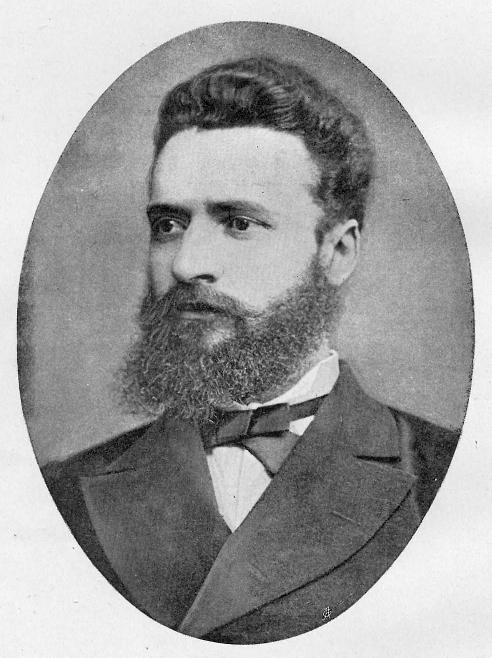
Hristo Botev - Bulgaria's most famous poet


I grew up with the Bulgarian culture and poetry of my ancestors in far off America. I learned the poetry of Hristo Botev and Ivan Vazov as a boy. I memorized “The Hanging of Vasil Levski” and “Hadji Dimitar” around the same time I was reading Whitman in English for the first time. Every time I read or recite those poems, I can heart my step-grandfather’s voice echoing in my ears. The man was not a poet. He was a banker, but he recited those poems like nobody else I knew with feeling, patriotism, and love.

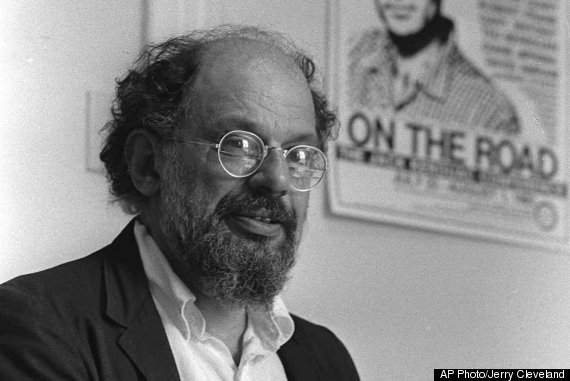
I started writing poetry as a teenager. It was the kind of rhyming stuff that most people come up with at that age. It’s imitation Browning and Tennyson without the former’s sense of history and latter’s prosody. It could pass for Robert Frost on one of his worst days or even very young Hemingway. I remember giving it to a professor of mine in college. A wizened German woman named Ms. McAuley who gave me Ginsberg to read.

Allen Ginsberg 

I wrote poetry for years after that. I filled notebook after notebook and binder after binder with my chicken scratch. I consumed Komunyakaa and Adrienne Rich collections as if it were my birthright. I went to writing workshops, criticized the hell out of my classmates, and won the professor’s approval. I wrote about death, life, and everything in between. I was infatuated with poetry. I was madly in love with the possibility of sound.

I stopped writing poetry ten years ago. I’m not sure how it happened that the bottom dropped out. One moment, I was madly scribbling away. The next, my notebooks were gathering dust in the back of a closet together with old forms and letters and piano exam evaluations. I tried to write. I truly sat there for hours on end trying to find that single silver thread, but it never came.

One of the many books I read in Bulgaria. 

Going on my Fulbright, I found poetry again. Not only in the landscape of the country I was born in, but in the books I was reading. I ploughed through Lope de Vega, Dimcho Debelyanov, and a hundred other thin books of poetry as well as anthologies of well known authors. I taught the Shakespeare sonnets. I once managed to somehow declaim “The Raven.” I fell in love again.

Poetry is that one art that works when nothing else does. When we want to capture the mood of a moment, we can take a picture. It lasts for years, but we can also write poetry. The lyric poem is founded on that idea. It was something the ancient Greeks discovered a long time ago. The idea that we could compress a moment of time through words and preserve that image we saw before us.

Poetry preserves our memory, but it also moves. We write it because we need to express ourselves in a way that is not easily understood by those around us. We bare our souls in poetry and we allow others to empathize. You cannot read “The Raven” without pinpricks on your neck or “Song of Myself” without a feeling of inward exultation. For a few moments, we live in the poet’s world and it becomes our world. We see what he sees, we understand what he understands.


I am still a poet for I was born in a country that has given birth to them since Orpheus. While I may not write in iambic pentameter, rhyme, or use any other device, I am a poetry because I see the world as the poet does. It is a world of tremendous beauty as fragile as the leaf fall off a tree and twisting in the wind full of tragedy and joy. 

Monday, June 1, 2015

All's Not Quiet on Eastern Front


In 2009, Patriarch Kirill was elected to be the head of the Russian Orthodox Church. In the six years since his installation, there has been a great deal of debate about the inner corruption of the church and its work with the government. For the most part, the voices of the grassroots activists have not been heard outside of Russia or they have been completely ignored because of their unpopular opinions. The following is a list of grievances that I have gleaned from watching various videos on YouTube in Russian.

1. Fascist treatment of non-mainstream Orthodox groups. In an address given several years ago, Patriarch Kirill referred to the members of the Russian Orthodox Autonomous Church (ROAC) and other catacomb groups which do not recognize him as “subhuman sectants.” There have been numerous attempts by the Moscow Patriarchate and the Russian government to shut down these groups. In Udmurtia, the parish church of Tsar-Martyr Nicholas was evicted from its property several times by the local diocese and patriarchate. In Suzdal, the ROAC and the government as well as the Moscow Patriarchate have been engaged in a long standing legal dispute over an ancient church in the historic city as well as the relics of a local saint.

The Moscow Patriarchate wants to stamp out all opposition in Russia that comes from non-MP groups. It views all of these groups as schismatic and, therefore, not worthy of being treated with any respect. In a Moscow suburb, there has been a case where a local catacomb family was forcibly evicted from its property by a parish priest who wanted to expand his church building. It is simply inconceivable why Father X. couldn’t build his church in the opposite direction or build on the land he was already given. 


2. The Collaboration between the Church and the Government. This item is not new. The symbol of the Russian tsars and the Byzantine emperors was the double-headed eagle, which symbolized the emperor and the patriarch working together. During the latter years of tsarist rule in Russia, the Holy Synod of the Russian Orthodox Church worked in close collaboration with the regime because it was a government department under the personal rule of an ober-procurator who was responsible to the tsar. (This was one of Peter the Great’s many church reforms, but that’s a discussion for another day.)

In today’s Russia, most politicians and oligarchs portray themselves as being Orthodox. There are many photographs of Vladimir Putin and Patriarch Kirill that make their way into newspapers. The Church has a strong lobby in the parliament and is able to lobby for educational and other reforms that are basically rubber stamped by the Kremlin since they go along with its party line.

One of the most recent reforms under discussion in Russia is the teaching of catechism classes beginning in the second grade.  This initiative was put forward by Patriarch Kirill himself. However, it flies in the face of the Russian constitution where it states, in language similar to our own Bill of Rights, that government shall create a state religion or impose one. Unfortunately, mandatory catechism classes in public schools violates freedom of religion in Russia and creates problems for educators since Russian public schools have been secular since 1917.


3. Corruption of the Clergy. This is not a new issue either. In tsarist Russia, there were numerous members of the clergy who were skin flints, drunkards, or worse. However, tsarist Russia did not have YouTube, iPhones, or any other methods for recording and reporting the corruption of the clergy and making it public. Due to the internet, a great of clergy corruption has been exposed for the whole world to see.

Patriarch Kirill’s lavish lifestyle including a palatial residence outside of Moscow that is currently being built for him as well as expensive watch (Photoshopped out of photographs) have come under criticism from believers and non-believers alike. Back in 1918, St. Tikhon did not ride around in a Mercedes or wear a Rolex. Way, way back in the 1300s, St. Alexis of Moscow did not need an entire motorcade to get from one part of Moscow to the other. To a certain extent, the Patriarch of Moscow and All Rus has become a politician and celebrity in his own right. His expensive lifestyle being part of it and it is this that befuddles so many people.

4. Church Scandals. The Russian Orthodox Church in Russia is not immune to scandals either. Over the last several years, there have been reports of children being routinely abused in monastic orphanages. They were starved and beaten for minor infractions. They were kept on a monastic rule and did not have clean clothes. These stories have scandalized many people into wondering who is controlling the monks and nuns that run these places. Indeed, these stories are so shocking to so many believers that they refuse to believe them in the first place.

Without a doubt, these and other incidents have made people wonder about whether there is any oversight at the top levels of the Church organization. Many wonder why the Patriarchate has not put its foot down and stopped the numerous false elders who are marching around Russia and influencing hundreds of thousands of people to hand over their life savings to build churches and their children to be educated in monastery.

(Note: An elder in the Orthodox tradition is a monk who possesses the gifts of the Holy Spirit in a way that is very different from that of a parish priest. In most cases, he is clairvoyant and can work miracles as well as give advice.)

Of course, this is only a short list of things that I find disturbing about the Church situation in Russia. I have no doubt that there are many fine members of the clergy in Russia, but there are also many rotten apples as well. The preceding article has been done as a public service.

Further information in Russian and English can be found here and here

"In Christ, there is no Jew or Greek": Nationalism and Orthodox Christianity

Andrei Rublev - St. Paul.


In recent years, there has been a great deal of discussion about nationalism and Orthodox Christianity in America. If you look in the Yellow Pages or enter the word “Orthodox Church” and the name of your city, you will probably find a list of parishes. If you look closely enough, you will find that more than one of them will have some kind of ethnic group attached next to it (Russian, Greek, Bulgarian, Serbian, Romanian). This can be confusing to many Americans since the Greeks, the Russians, and the Bulgarians belong to the same Orthodox denomination, hold the same beliefs, and have a similar praxis of the Faith.

The main reason why countries of origin are thrown in next to the names of church has to do with church history in the United States. A little more than one hundred years ago, numerous immigrants were coming to this country from throughout Southeastern Europe and the Russian Empire. These groups of immigrants came together along national lines and built their parishes as a way to keep their communities together and preserve their ethnic identity. In the fictional city of Anytown that I like to use the Russians built St. George’s, the Serbs had St. Sava’s, and the Bulgarians built St. Cyril and Methodius.

For many reasons, the immigrant parish was an important place. It was where the children were taught about the faith, charitable committees were formed, languages schools were created, and so on. The parish almost exclusively served the local community in whatever ways it was needed. Very few people from outside ever joined and it was not until fairly recently that Americans have started converting to the Orthodox faith en masse.

Today, many of these parishes founded by immigrants still exist. As the parishioners have gotten older and depending on the jurisdiction, some of these parishes have become more Americanized. There might be English at the Divine Liturgy on Sunday morning. The priest might not be Bulgarian or Russian, but an American convert. Perhaps, most of the congregation wouldn’t even speak the old language or very few would if there haven’t been any immigrants from the old country in recent years.

Of course, there are places where the immigrant mindset is still alive and well. A good friend of mine has written a screenplay where a new choir director is register in the parish. He looks down at the form and says to the parish priest, “Native village?” The priest waves him off.  While this exchange may sound like a joke, it most certainly isn’t. How many people do you know that have shown up for services and been asked by some well-meaning older woman whether they were Russian, Serbian, or Greek? After all, aren’t those the people that go to this parish?

Paperwork aside, there is a nationalism that can infect parish life. In some Russian parishes, they like to celebrate “Victory Day” (V-E Day to Americans) with songs, dances, and films that come from the Soviet Union. However, Americans don’t celebrate “Victory Day.” The day on which Americans commemorate their war dead is Memorial Day.

Of course, the Russians also bring out their monarchism into a democracy. Indeed, it would seem that becoming an Orthodox Christian necessitates having an icon of Tsar-Martyr Nicholas II in your icon corner, a Russian tricolor or Imperial flag on your wall, and a recording of Rachmaninov’s Second Symphony playing on the iPod.

None of this, however, is what Orthodox Christianity is about. At its core, Orthodox Christianity is about our inward transformation into icons of Christ. It is a deeply relational faith and one that challenges us to struggle constantly against the old man in order to put on the new. This struggles has very little to do with Victory Day celebrations, monarchism, or having to learn a new language. Indeed, these things are outer trappings and white washing.


St. Paul writes that in Christ “there is neither Jew nor Greek, slave or free, circumcised or uncircumcised.” The same applies to the Church. There is no Bulgarian, Greek, Russian, Ukrainian, or Arab. We are all brothers and sisters to each other regardless of national origin and we are supposed to be transformed together. Putting our national differences at the forefront of our is not what it is about. Not at all.  

Turkish Atrocities in Macedonia, 1903

Peio K. Yavorov (1878-1914), Bulgarian poet and journalist 


During the current crisis in the Middle East, it is important and necessary to remember that mass killings of Christians have occurred before. Beginning in July 1903, numerous Bulgarians were butchered in Macedonia during the Ilindent Uprising. The following excerpts are taken from mimeographed newspapers that were published in  Bulgaria and edited by the Bulgarian poet Peio K. Yavorov (1878-1914). The translations are mine.

“The village of Nerezi was attacked and burglarized by Albanians and Turkish irregulars; 3 villages were killed. In the villages of Chereshovo and Golamani, there were numerous victims. In the village of Brezica, nine people were arrested and tortured to death.” 
 “In Gumendzha, the Turkish army leveled and destroyed the Bulgarian church. Within ten days’ time more than 200 people in the town and its surrounding areas were arrested.” 
 “Two or three weeks ago in Novo Selo, a spy was killed. Numerous innocent villages were accused of the crime and are sitting in prison, where they are the recipients of torture every day.” 
 “On the evening of August 7, the shepherd Kolio Donchev was attacked near the city of Strumica by a soldier and hit on the head with the butt of a rifle. The poor man lived through the most terrible sufferings for two days before he died.” 
“On the 19th of August in Thessalonica, twenty five people were freed from prison by the authorities. Having returned to their homes, they were once again arrested for no apparent reason.”
“The monastery of St. John in Veles was completely burned to the ground and destroyed by Turkish troops. Numerous people in the area of the monastery were arrested, tortured, and a killed.”


Source: Kolevski, V., Ed. Collected Works of Peio K. Yavorov, Vol. 4: Critical and Journalistic Works. Sofia: Bulgarian Writer, 1979.

Sunday, May 31, 2015

A Man in Full

Fr. Alexander Schmemann (+1983) in later years 


In recent years, there has been a great deal of debate about the writings of Fr. Alexander Schmemann (1921-1983), the former dean of St. Vladimir’s Orthodox Theological Seminary in New York and one of the foremost Orthodox theologians of the 20th century. There are many people throughout the Orthodox world who view him as a radical, ecumenist reformer who wanted to see something akin to Vatican II in the Orthodox Church. On the other side of the fence, there are those who believe that his writings are relevant to the way that we see ourselves and the Church today and that they should be used for restricting. I take neither of these positions.

I was introduced to Fr. Schmemann's writings when I was a teenager. My home parish had a bookstore that contained a little book called “I Believe.” This was the first in a three volume set of sermons that were broadcast into Russia by Fr. Alexander via Radio Liberty. I recall reading this book over the course of several days and finding that it resonated with me very deeply.

The main reason for why I found resonance with Fr. Schmemann's writings was that he made religion simple. As anyone who has worked in radio will tell you, it is necessary to get the message across in the most cohesive and concise way possible. When religion and theology is under discussion, that kind of advice can be difficult to heed. However, Fr. Schmemann was so good at what he did that he brought thousands of people to the Orthodox Church and received letters from all over the Soviet Union thanking him for his broadcasts.

In his radio sermons, Fr. Schmemann speaks from the heart about the hard truths of human experience. He does not begin his series on the Nicene Creed with the first words, but rather uses the idea of what faith is. He talks about a study conducted in France wherein believers were to defined to ask what faith was and how it worked in their lives. In one of his broadcasts, he examined several of the most popular answers and gently demolished those with which the Orthodox Church does not agree.

Obviously, there is a great deal that is lost in translation. Russian is a language that is lyrical and almost poetic. When listening to these broadcasts online, one not only feels the power of the message that is being conveyed. One also hears the bass baritone voice, a voice akin to that of the great operatic singer Chaliapin that is speaking directly to its listeners.

Fr. Schmeman wrote numerous theological books and articles. “For the Life of the World” is probably his most important. It is an examination of the Sacrament of Holy Communion and the Divine Liturgy from many different angles. It is also an attempt to make us see how important the Divine Liturgy and the Eucharist is to our daily lives. As a matter of fact, Fr. Alexander Schmemann was an extremely vocal advocate for frequent Holy Communion, which was not common during his first years in America and yet is more common today.

In order to understand Fr. Alexander Schmemann’s life, however, it is necessary to read his journals. In the volume set that was published in Russia and the excerpts that have been translated in America, one gets to know the man behind the curtain. For most of his life, Fr. Alexander struggled to reconcile the many different threads that made him a man in full. He struggled with church politics in America and yet he also participated in them, he was a Russian living abroad and yet he also tried as hard as he could not to be a Russian.


The tremendous struggle recorded in these personal diaries during the last ten years of his life allow us to see that he was neither the renovationist demon of the conservatives nor the radical of the liberal of the Orthodox Church. Instead, Fr. Alexander Schmemann was a man just like any other. Someone who was working out his salvation in fear and trembling and trying to figure out what it all meant. This is the man that we do not see in our constant debates over his legacy and yet this is the only version of him that matters. May his memory be eternal! 

The Guilt Trip


A common experience most people have to deal with is guilt tripping. No, it’s not tripping out on a drug called guilt. It’s when somebody says something to you and then makes you feel guilty for doing whatever it is that you’re planning to do. For example, I encountered this kind of guilt tripping in an online conversation with a friend. I told her I was leaving a website that I didn’t like and she wrote me back, “If you leave, my depression might spin out of control.”

Guilt tripping is an emotionally manipulative behavior. Since someone can’t get another person to do what they want them, they guilt them into doing it. My friend threatened me with her mental health problems, so that I would stay on that site. Certain traditionalist Catholic priests do it all the time from the pulpit too – “If you walk out of this parish, you’re going to spend the rest of your eternity in hell.” Of course, they don’t put it quite that bluntly, but the guilt trip is always there.

In his book, Brideshead Revisited, Evelyn Waugh writes about a phenomenon known as Catholic guilt. The is the guilt that you feel when you are told over and over again that you have to make absolute satisfaction for your sins. Not only this, but the guilt is something you feel over every day actions. It’s called scrupulosity, but it’s something that is consistently reinforced by traditionalist Catholic clergy. I say traditionalist clergy because Pope Francis doesn’t do guilt tripping. He might make a snide remark here and there, but he’s not about the guilt.

The only way to deal with a guilt trip is to just let it go and forget about it. I’ve dealt with this phenomenon for so long that I finally learned to put my foot down. If someone tries to guilt trip me into doing something, I ignore them and do what I think is best for myself. I don’t allow myself to be emotionally manipulated into doings that I don’t want to do and which, ultimately, could be harmful to me.

For a long time, however, I was not an assertive person. I suppose you could say that I was a throw rug for other people to walk all over. When I got guilt tripped into doing something, I did it. Full stop. Only years later did I learn that it was okay to say no and to walk away from people who are harmful, but it’s not something is easy to do. Sometimes, there are friendships and other close relationships that are on the line, but it’s what I have to do to stay sane.


If you’re dealing with someone who sends you on a guilt trip, stand up for yourself and walk away. You don’t have to be crude or angry about it. You don’t have to even acknowledge what you’ve heard. Just don’t let it get to you. Continue doing what you’re doing and ignore it. If it gets to a point where you can’t stand it anymore, confront the person and walk away.  

Saturday, May 30, 2015

Book Review: "White Nights" by Fyodor Dostoyevsky


Fyodor Mikhailovich Dostoyevsky is, perhaps, the greatest 19th century Russian novelist, but it has taken me a long time to truly appreciate his tremendous talent. The first book I read by him was "Crime and Punishment." It was a book that utterly hypnotized me from beginning to end. I didn't read anything after that for a long time. I attempted to read "Notes from the Underground" several times, but I quit after the first few pages. I did not have much, if any patience, for the anonymous narrator and his wayward way of talking.

"White Nights," however, was a completely mesmerizing experience from beginning to end. The story is about love and quite simple, but there is a beauty to it that one cannot describe with mere, mortal words. It is the kind of work that makes your heart beat faster and your eyes water. You react viscerally to the actions of the anonymous narrator and Nastenka, the young woman he befriends. You experience all this because Dostoyevsky, the master of the novel and the short story, sucks you in and doesn't let you go until the final sentence.

Indeed, there are very few books or short stories that I have read feeling as if I were under hypnosis. Most of the time, I get distracted. I started looking at my watch or at the track setting for the CD I'm listening to. Not with this story. I was enchanted from beginning to end.

I am, perhaps, being a bit hyperbolic in the way I speak of a short work such as this. However, I think that it is most fitting. I recommend this short story wholeheartedly to anyone who has ever been in love with someone for that is its very essence.

The Rant of A Bibliomaniac


“People don’t read anymore. My son says it’s because it takes too much effort for people to move their eyes across the page.” The following quote is not from a disgruntled parent, but from a magazine publisher in the movie In Good Company. Even though the character’s statement may sound trite, it doesn’t make it any less true. People don’t read as much as they used to. Whether it takes a lot of effort to move the eyes across the page or not is another matter entirely.

I grew up in a family where reading was a very common activity. My grandparents on both sides were book people. They read a great deal in all kinds of genres. My paternal grandparents would subscribe to the complete works of Dostoyevsky, Chekhov, Tolstoy, Zola, and Balzac since the volumes couldn’t be purchased individually. My own parents also ordered books or bought them from a Russian language bookstore in Sofia. My sister and I are also readers. I suppose I’ve been reading since the first time I ever saw a book even though I wasn’t “reading” at the time, but only looking at pictures.

I still read a lot. During a good week, I can plough through four or five books. That’s about twenty books per month or two hundred books a year. I’m a bibliomaniac. If it’s been two covers or digitally available for a Kindle, I will read it. I really do not care what is between the covers as long as it’s interesting. There’s very little that I won’t read apart from romance novels and erotica. Otherwise, everything is fair game.

Reading as much as I do, I’m always surprised by how little other people read. My own sister reads a lot of magazines, but she probably only reads one or two books a month. There are other people I know who don’t read at all. As a matter of fact, I’ve found that my generation is probably the last one that reads on a consistent basis. After all, we were the last generation before the internet showed up and it was easy for all of us to read everything online and not have to go to the library to dig out an encyclopedia for a report on Ulysses S. Grant. (Yes, I wrote a report on him during fourth grade. Yes, I did have to rummage through several encyclopedias before I found the information that I wanted.)

When I was living in Maryland, I went to bookstores in downtown Washington on a weekly basis. In Dupont Circle alone, there were Books for America, Second Story Books, and Kramerbooks & Afterwords – A Café. Since I went to these places frequently, I was able to look at the same shelves over and over again. Sometimes, books would sit there for weeks or months without anybody purchasing them. Sometimes, they stayed on those shelves for over a year. I don’t think that people didn’t buy them because they weren’t interest, but simply because they don’t read anything.

And if people do read, what is it that they read? A lot of people read pot boilers and best sellers like Gone Girl or The Millennium Trilogy, others read thick political thrillers or biographies. Very few, however, read literature and fewer still read classics. I think part of the reason for this could be that classics are somehow viewed as inaccessible and elitist. Unfortunately, that is not the case. You do not have to be a genius to understand My Antonia or All Quiet on the Western Front. You do not have to be an English major in order to  read David Copperfield or Paradise Lost. All you need is an open mind and the patience to get through them.

Patience is probably the main thing that a lot of people don’t have in this day and age. We like having instant access to everything. We like clicking on a Youtube video and watching it play. We logging on to Facebook ten times a day to see what other people have liked or disliked. Due to the instantaneous nature of these things, we do not have the patience to sit down and read a book or even to schedule some time out of our busy schedules in order to do it. More and more frequently, people don’t read as much as they did before. Books are sometimes thrown out of library entirely or thrown away into garbage bins.


After reading one book after another for years, I can tell you that reading is one of the most enjoyable and interesting activities you can engage. It opens up the mind and exercises the imagination. It allows a person to explore different worlds, to travel backward and forward in time, to meet new people and make new friends. Reading demands very little – only time. You don’t have to be rich in order to read a book. You just have to sit down and do it. 

Friday, May 29, 2015

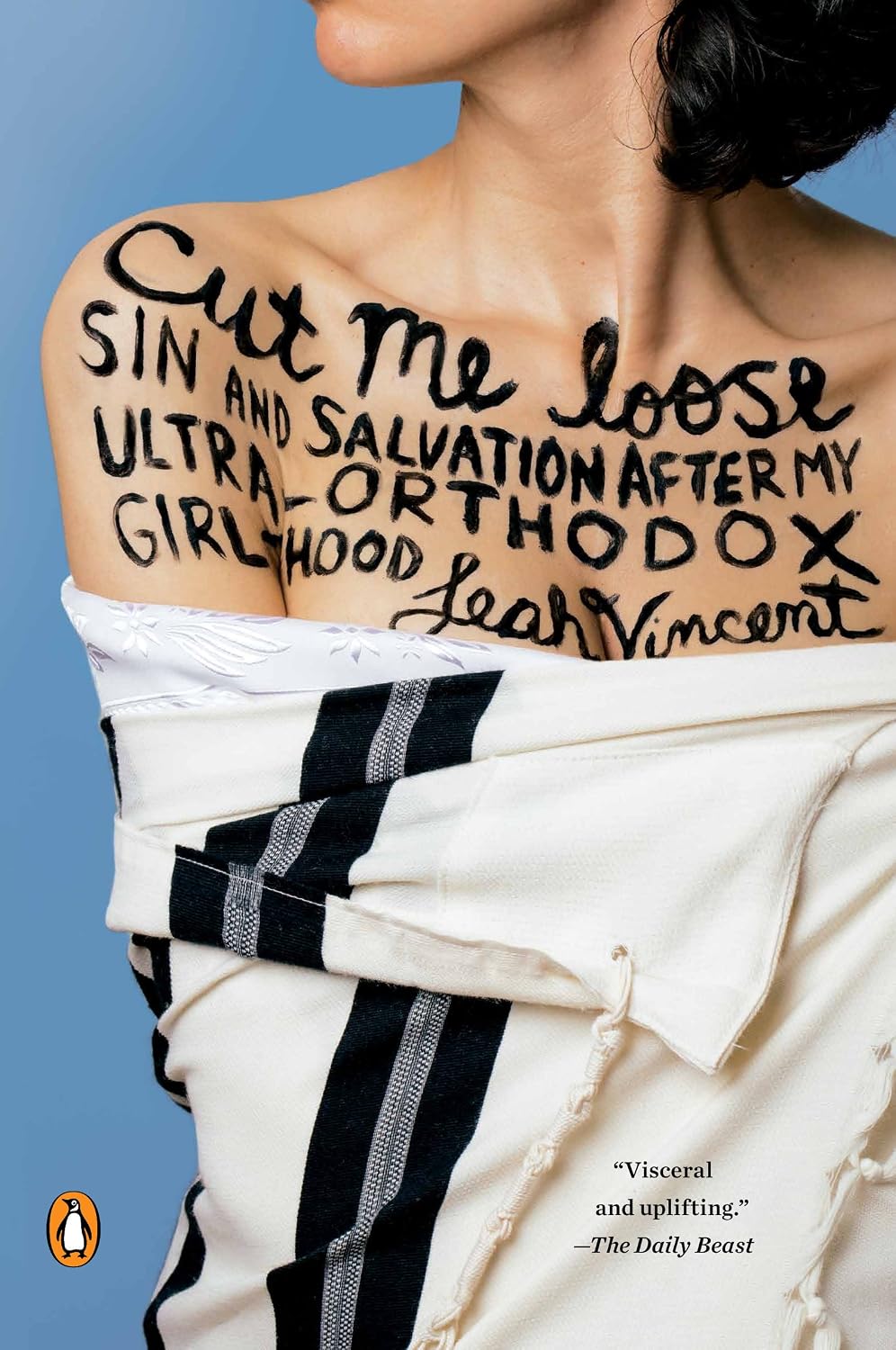
Book Review: "Cut Me Loose"


The memoir genre has grown by leaps and bounds in the last few years. However, it seems to me that the recent spate of books published by formerly ultra-Orthodox Jews offer a much needed antidote to the world of ultra-Orthodox Jewry that most people imagine. Indeed, that world in the United States is not the same as the one in Chagall’s paintings, Chaim Potok’s The Chosen, or Barry Levinson’s “Avalon.” The ultra-Orthodox world of Deborah Feldman’s “Unorthodox,” Shuleem Deen’s “All Who Go Do Not Return,” and Leah Vincent’s “Cut Me Loose” is a world that is much darker and more tragic than the one that we imagine.

Leah Vincent’s memoir is the most recent of the three. It is a well-written, thought provoking journey into the world of Yeshivish Jews. The story itself is one of a girl being cast out by her own community for violating sacred laws, find her identity, and then moving on to a better, brighter future. However, Leah Vincent’s tale is not a typical Cinderella story. It is far from that.

One of the ideas that Vincent iterates throughout the book is the notion that those who leave ultra-Orthodox communities are doomed to spend the rest of their lives as drug addicts, castaways, and good-for-nothings. Every woman who is not an obedient wife popping out children at regular intervals and leaves the community is viewed as nothing less than a whore. These brutal terms were so ingrained in Ms. Vincent’s psyche that she found herself turning into a woman who slept around with other men thereby fulfilling her community’s notions of what she would become.

The sexual nature of much of the memory is extremely explicit. I would not calling this pornography nor put it in the same category as other books that are out there, but the descriptions clearly show how violated Vincent was by the men in her life. These men, I would like to add, used her and threw her away as if she was nothing more than a toy that could be discarded at will. Even in her relationship with a professor, she was dropped when she got in the way of that man’s marriage.


Even more harrowing than Vincent’s sexual life is her treatment by her family. The author’s rejection by her most of the members of her family is brutal and final from the time she was seventeen years old. She was by her parents as if she had a disease. They also refused to cover her bills when she landed in a psychiatric hospital. Their treatment of her, however, makes sense to those who understand that a person who is unclean must not be touched at all and someone who has left the fold must be rejected. The world of the ultra-Orthodox is not grey. It is black and white. It is a lesson that Leah Vincent learned to her sorrow and one that also allowed her to grow into the woman she eventually became. 

The Tsar's Millions

 
Tsar Nicholas II 
Since 1917, there have been persistent rumors in the former Soviet Union as well as abroad that Tsar Nicholas II and his family stored their money in bank accounts in Switzerland, England, and elsewhere. The myth of the Romanov millions is one that refuses to die just like the old chestnut that Anna Anderson and Grand Duchess Anastasia Nikolaevna. Just like the latter, however, the former isn’t true at all.

In his memoir, Grand Duke Alexander Mikhailovich devoted an entire chapter to the Romanov millions and the tsar’s expenditures. As a cousin and close friend of Nicholas II, Grand Duke Alexander was in a unique position to put the myth to bed once and for all. In his chapter, he notes that the Romanov bank accounts abroad did contain a lot of money. However, all of those accounts were emptied during the advent of the First World War for fear that they would be nationalized or confiscated since some of those accounts were in German banks. All of these funds were transferred to banks in Russia.

In addition, the Tsar’s family had many assets that belonged to the tsar personally. These included vineyards in the Crimea, monasteries throughout the country which paid dues to the tsar, as well as the large vodka monopoly. All of these enterprises were either sold to investors at some point before World War One or, in the case of monasteries, they were granted autonomy. The funds for these sales were also placed in Russian bank accounts.

Nicholas II not only sold his personal property, but he also sold many family treasures. Some people might wonder whether he was a money grubber or a skin flint since the amount of money that he collected would have been well into the billions in today’s funding. The truth is much more astonishing.

Tsar Nicholas II and Tsaritsa Alexandra spent every last penny of their personal income as well as the assets I have mentioned above building hospitals, orphanages, and homes for wounded soldiers during World War I. By the time of Nicholas II’s abdication and his eventual execution, the legendary Romanov millions had shrunk to almost nothing. Everything had been spent on charity.

As a deeply religious Orthodox Christian, Nicholas II understood that his duty was not only to command the armies, but to create charitable institutions on the home front for his subjects. The military hospitals in Moscow and St. Petersburg, some of them in the tsar’s own palaces, were staffed by Tsaritsa Alexandra, Grand Duchess Elizabeth Fyodorovna (the tsar’s sister-in-law), and his eldest daughters Olga and Tatiana. For many years, many veterans who convalesced in these hospitals would remember the care shown to them by the tsar’s wife and daughters. None of this would have been possible without him investing his own funds to help those who were in need.


The story of the Romanov millions brings up an important question for us to consider: What has your head of state done for other people and how many of them have invested their own personal funds and designated them for helping others? I’m sure that the answer would be many. However, there are very few who would hand over their life’s savings to their countrymen in their time of need. Nicholas II was just that kind of person.  It is for this and the heroic manner in which he met his death that the Russian Orthodox Church glorified him and his family as saints. 

Thursday, May 28, 2015

The Innate Conservatism of Bulgarian Culture


One of the perks of being a Fulbright alumnus is the fact that I serve as a mentor to other Fulbrighters who are going to Bulgaria. Not so long ago, I received an e-mail from one asking me for advice. She sent me a link to her blog wherein she wrote about her experiences. Unfortunately, her experience in the country was not positive and this post is simply an example of how frustrating her time as an ETA was for her.

You see, my friends, Bulgaria is a conservative country with a conservative culture. The things mentioned in the post are considered taboo. To a certain extent, the following rule applies to taboos in Bulgarian society - "If you don't talk about it, it doesn't exist." However, there is another rule that equally applies - "It's indecent and shouldn't be talked about at all." 

There are many topics that are not talked about in Bulgaria or swept under the rug. For example, very few people talk about domestic violence. It's something that happens all the time, but it's not something that is openly discussed outside the home. In Bulgaria, people believe that what they do is their business and nobody else's. To talk about something that happens inside the home to other people is the same as inviting those people into those house and showing them your dirty laundry. That is a massive faux pas in Bulgarian culture and society. 

To an extent that no longer exists in America, Bulgarians have the ability to draw a distinct line between their private and public selves. This division between the public and private self came into existence during the years of Ottoman occupation and was reinforced during the nearly fifty years of Communist oppression. During the Communist period, informers were used to infiltrate families and businesses. Saying one thing that could be construed as anti-Communist could land a person in jail for a considerable period of time. Children were taught from a young age that what they said to their friends and what was discussed at home were two different things which should not be mixed together. 


There is an old Bulgarian saying, "What was nobody's business became everybody's business." In a small country with a population of six million and in small cities and villages, gossip is a part of every day life. Stories spread faster than wildfire whether a person wants them to or not. When I was teaching in Plovdiv, I used to visit with my aunt (a cousin of my mother's). In our conversations, she would mention something about how I was doing at the school. When I asked her where she got the information, she would tell me that she received it from a friend. 

Now imagine if malicious backbiting gossip were to be spread about your family or your relatives in a small community The social consequences can be deadly. A person can be ostracized from the community or worse. Therefore, it is better for Bulgarians to close their eyes and ignore a problem rather than discuss it out in the open where other people can know about it. 

This clear division between what is public and what is private is one part of the conservatism I mentioned earlier. Another element is the fact that Bulgarians still have a very firm sense of what is right and what is wrong, what is good and what is evil. To a certain extent, this comes from the influence of the Bulgarian Orthodox Church. While many are not churchgoers, the Church's teachings on morals have been ingrained into the very fabric and psyche of modern Bulgarians. Whether liberal or conservative, they still know what is right and what is wrong. It is a very black and white world. A world which doesn't allow for shades of grey.

It is important for us to lay aside our ethnocentric views when living in other countries. It is necessary that we view the country and its people on its own terms rather than through whatever blinders we may have acquired as a result of being Americans. More importantly, we should learn to be tactful and diplomatic in our dealings with others. Whether we agree with them or not, we must learn not to impose our views on them and keep them to ourselves to avoid conflict. Only in this kind of environment can there be anything that remotely resembles an open exchange of ideas. 

All About Lena

Lena Dunham 

A few years ago, Lena Dunham was a nobody posting independent shorts on Youtube. At the time, she was more famous for having famous parents than having done anything remotely interesting in her own right. Today, however, you cannot avoid Lena Dunham. She is everywhere and she is spewing trash like a broken garbage truck.

I do not have a problem with Lena Dunham's artistry. Tiny Furniture was an interesting film about coming home from college and finding yourself, while Girls is a portrayal of what life is like for young women in New York. She writes, directs, and edits her work and her acting is average. It is not so much these things that are problematic as what she has said and that is where she is stirring up controversy.

In her memoir, Dunham claimed that she was raped by a classmate at liberal arts college. She gave the person a name in her book and then stated that he was a member of the Young Republicans. Unfortunately for Dunham, the young man had never laid a finger on her. Lena later backtracked on this and the essay was seen as fictional.

A few months ago, Dunham flew into a rage on social media when her relationship with her sister was discussed in an internet magazine. In her memoir, she wrote that she shared a bed with younger sister and explored her body. The passage in question smacked of child abuse and molestation. When confronted with what she had written, Dunham tried to backtrack, but couldn't. Her sister claimed that what happened to her was normal.

Most recently, Dunham wrote an article comparing her boyfriend to a dog. Considering her track record, it was par for the course. The Anti-Defamation League issued a statement claiming that the article was "tasteless" and "played with offensive stereotypes about Jews." Dunham herself is half-Jewish and culturally identifies as a Jew just like Philip Roth. Yet Roth has been able to satirize his heritage without creating needless, useless controversy.

Lena Dunham's problem, it seems to me, has a lot to do with the generation she is a member of. Most young people today are not filtered when it comes to their private lives. If you go on Facebook, you will see them posting pictures of what they had for lunch, where they went for dinner, what they were doing throughout the day. The same is true for Instagram and it's even worse on Twitter. Everybody is talking about their lives and sharing and, sometimes, oversharing.

Social media is a part of the problem here. We like it when people "like" our posts on Facebook or Instagram. We like having followers, but the truth of the matter is that "likes" and "friends" don't matter in the real world. You can have 500 friends on Facebook and still be the loneliest person on the planet. The internet, whether we like it or not, is not the real world.

Yet it also seems to me that Dunham pushes the envelope because she knows she can. On Girls and Tiny Furniture, there are numerous moments that can be described as cringe worthy. One of the tamer ones occurred when Hannah Horvath described herself as being "a pounded out piece of meat." This kind of realism works in the arts. After all, Manet portrayed a prostitute for his "Olympia"

Pushing the envelope in the arts is one thing, but pushing it in real life means that it will necessarily backfire. The amount of ink that has been spilled virtually on Dunham's memoir and her frequent Twitter should have shown her that there is a fine line between what you can say in your films and what you can tell people on Twitter. Her audience might laugh at her antics on her TV show because it is happening to someone else, but it's entirely different when the medium is a memoir or a Twitter update or a New York Times article.

People like Lena Dunham remind me of Tinkerbell. They need applause in order to exist. As long as their audience loves and adores them and thinks that their works is even remotely interesting, they are happy. When that audience turns around? Well, let's just say that Twitter rage and name calling and TMI is what you get because these latter day Tinkerbells hate it when people are not paying attention to them.

Wednesday, May 27, 2015

On Liturgical Languages


Sts. Cyril and Methodius, Equals-to-the-Apostles
and Teachers of the Slavs. (Sofia, Bulgaria)

A friend and I have been having ongoing discussions on the state of Orthodox Christianity in America for a while. One of the recurring and most controversial topics within this is liturgical languages.

Orthodoxy has a great tradition of incorporating the native language of a people that has been missionized into the life of the Local Church. For example, translations were made of the Divine Liturgy and various other works into Chinese in the 19th century. St. Nicholas of Japan single-handedly translated these same texts as well as the Gospels into Japanese. Going even further back in church history, Sts. Cyril and Methodius created an alphabet for the Slavic peoples so that the divine services could be held in their own languages.

My friend and I both live in the United States. It would make sense if the liturgical language of our country is the same as the one that is spoken by the vast majority of the population - English. Sadly, this is not the case. While the Antiochian Self-Ruled Archiodecese and the Orthodox Church in America (OCA) hold their services almost exclusively in English, there are other jurisdictions which do not use English at all or only make grudging concessions to its usage.

Let's use  St. George Russian Orthodox Cathedral in Anytown, USA, as an example of what happens in some places. St. George was established in the 1930s by a group of White emigres and has been under the jurisdiction of the Russian Orthodox Church Outside of Russia (ROCOR) ever since. If you go to St. George's website and pull up a church schedule, you will see that all of the services are conducted in Church Slavonic (the liturgical language of the Russian Orthodox Church) on a weekly basis. This is all good fine and if you're a Russian, Serb, or Bulgarian, but what if you're not.

You peruse the schedule again. What do you see? Before every Slavonic service on Sunday, there is an English service that is served by a separate group of clergy with American sounding names. However, this Liturgy is at 7:30 in the morning whereas the Slavonic is at 10:00 am. So, which one do you attend? Do you sacrifice a language that is familiar to you for one that you've never heard? Do you sacrifice a service that you can follow for one you can't? That's up to you.

St. George Russian Orthodox Cathedral in Anytown is an example of a parish that tries to balance English and Church Slavonic by having two Liturgies every Sunday. One for the converts, one for the numerically superior Russians. (I use the term Russian to include Belorussians, Ukrainians, and other people from the former Soviet Union who speak the language.) If the parish has enough clergy, the schedule works fairly well. When the Metropolitan comes, the two Sunday services are combined into one.

There are other places, however, where having two Liturgies every Sunday in English and Church Slavonic simply doesn't work. Sometimes, the English scheduled once a month on the fourth Sunday. Sometimes, the Liturgy is half in English and Church Slavonic. Sometimes, the English Liturgy is served in a separate space like a chapel. Sometimes, there's no English in the liturgy at all.

Some people might say that Church Slavonic makes sense because they understand it. All right, but not everybody understands it. There are Russians who do not comprehend and need a prayer book written in both Russian and Church Slavonic in order to understand it. Your average American doesn't know anything about the language at all and a Liturgy served in Church Slavonic can be a major turn off to an inquirer who thought for some reason that the services were in English.

Another drum that people like to beat is that Church Slavonic is the traditional language of the Church. Maybe in Russia, but it wasn't the traditional language of the Church at the very beginning. The very first services were done in Aramaic and Greek. Only after Sts. Cyril and Methodius translated the service did Slavonic become the standard liturgical language of the Slavs.

Some people might say that it is necessary to keep the Church Slavonic for immigrants who come from the old country. This make sense, but how many new parishioners does your typical suburban parish get from Izhevsk and Bakchisaray every year? Not that many, probably. Don't get me wrong Church Slavonic can still be used, but it shouldn't be the main language of the services if 75% of the parish doesn't understand it.

Of course, there are other objections that can be raised here. In my opinion, however, the only way that the Orthodox Church in this country will grow is if English is the main language of the services. It is the language most of us speak. It is the language in which signs are written. It also makes historical sense. If Sts. Cyril and Methodius were sent to evangelize the United States today, they wouldn't do it in Greek. They would do it in English.


Thoughts in a City Cemetery

Serbian cemetery, Fairmount Memorial Park. 


A cemetery is a place where I see the constant forward motion of humanity from one generation to another. In the cemetery I regularly visit, there is a large Serbian section. In the 1920s and 1930s, the earliest head stones are written in Cyrillic. Then, they are written in Cyrillic and English. Finally, they are written in English alone. Over the course of three generations, these immigrants were assimilated into American society.

Looking at these head stones, I often think about my journey. I was born in Bulgaria and came to America with my parents when I was a child. I grew up in this country, went to school here, and became an American. My parents live in the United States, but their minds are still in the Old Country. We still speak Bulgarian at home. My sister and I, however, are of the second generation. Our minds and our hearts are here in America and we speak English together.

The immigrant experience in America is similar no matter what country your ancestors came from. In the beginning, there was a period of adjustment and then came assimilation. The first language was lost, the ancestral religion was not kept, and assimilation took its course. Indeed, America is one of those countries which assimilates its immigrants very, very quickly. By the time my grandchildren and great-grandchildren are around, they will probably know only a little bit about my family and the fact that we came from a place called Bulgaria.

Many immigrant communities make strenuous efforts to keep the heritage alive. Churches are built and Saturday schools exist where children are educated in the language and history of their ancestral country. These institutions do not stop the assimilation process, but they act as an antidote to that which can be found in American society and as a powerful reminder that these young people, their parents, and grandparents came from a particular country with a particular outlook and a particular moral code.

In my own family, my mother made sure that my sister and I studied the Bulgarian language. We still speak it at home with our parents. Both of us can read it and my sister can write it. (Sadly, the only way I can write in Bulgarian is on a typewriter or computer. I never mastered cursive, which my sister did.) I taught myself a great deal about Bulgarian history by borrowing books from the library through Interlibrary loan and conversations with my parents as well as letters from relatives in the old country.

When I went back to Bulgaria in 2010, I felt a profound sense of homecoming. I had returned to the country of my roots. However, I also experienced a sense of alienation. The Bulgaria that existed in my memory, the one I had read about in book after book and poem after poem, was a country that no longer existed. There was very little in that Bulgaria of the country I had known as a child.

My return also taught me that I was not Bulgarian, but a Bulgarian American. While I still speak and read Bulgarian regularly, my roots are firmly in my adopted country. It is the place where I awoke to the world. While my Bulgarian background has shaped my outlook and my behavior, my life in America has made me the person that I am today and for that I am profoundly thankful.

Saturday, May 2, 2015

Return to the Blogosphere

I have been writing in the blogosphere for the better part of thirteen years. In the beginning, I kept a personal livejournal when it was all the rage. Later on, I had a wordpress blog where I wrote about my religious experience. I will be writing about my life and religious beliefs here, but there will be other things here as well.

By way of introduction, I was born in Bulgaria and came to the United States when I was six and a half years old. I have spent most of my life in Washington State. I have a Master's in Teaching English and a Bachelor's in creative writing. I am a convert to Catholicism, but I was raised in the Orthodox tradition of my ancestors. I enjoy classical music, reading books, and writing, as well as hikes, bike rides, and racquetball.

I will be more substantive in the future, but I think that this will suffice for now.