Showing posts with label Book Review. Show all posts

Saturday, May 30, 2015

Book Review: "White Nights" by Fyodor Dostoyevsky


Fyodor Mikhailovich Dostoyevsky is, perhaps, the greatest 19th century Russian novelist, but it has taken me a long time to truly appreciate his tremendous talent. The first book I read by him was "Crime and Punishment." It was a book that utterly hypnotized me from beginning to end. I didn't read anything after that for a long time. I attempted to read "Notes from the Underground" several times, but I quit after the first few pages. I did not have much, if any patience, for the anonymous narrator and his wayward way of talking.

"White Nights," however, was a completely mesmerizing experience from beginning to end. The story is about love and quite simple, but there is a beauty to it that one cannot describe with mere, mortal words. It is the kind of work that makes your heart beat faster and your eyes water. You react viscerally to the actions of the anonymous narrator and Nastenka, the young woman he befriends. You experience all this because Dostoyevsky, the master of the novel and the short story, sucks you in and doesn't let you go until the final sentence.

Indeed, there are very few books or short stories that I have read feeling as if I were under hypnosis. Most of the time, I get distracted. I started looking at my watch or at the track setting for the CD I'm listening to. Not with this story. I was enchanted from beginning to end.

I am, perhaps, being a bit hyperbolic in the way I speak of a short work such as this. However, I think that it is most fitting. I recommend this short story wholeheartedly to anyone who has ever been in love with someone for that is its very essence.

Friday, May 29, 2015

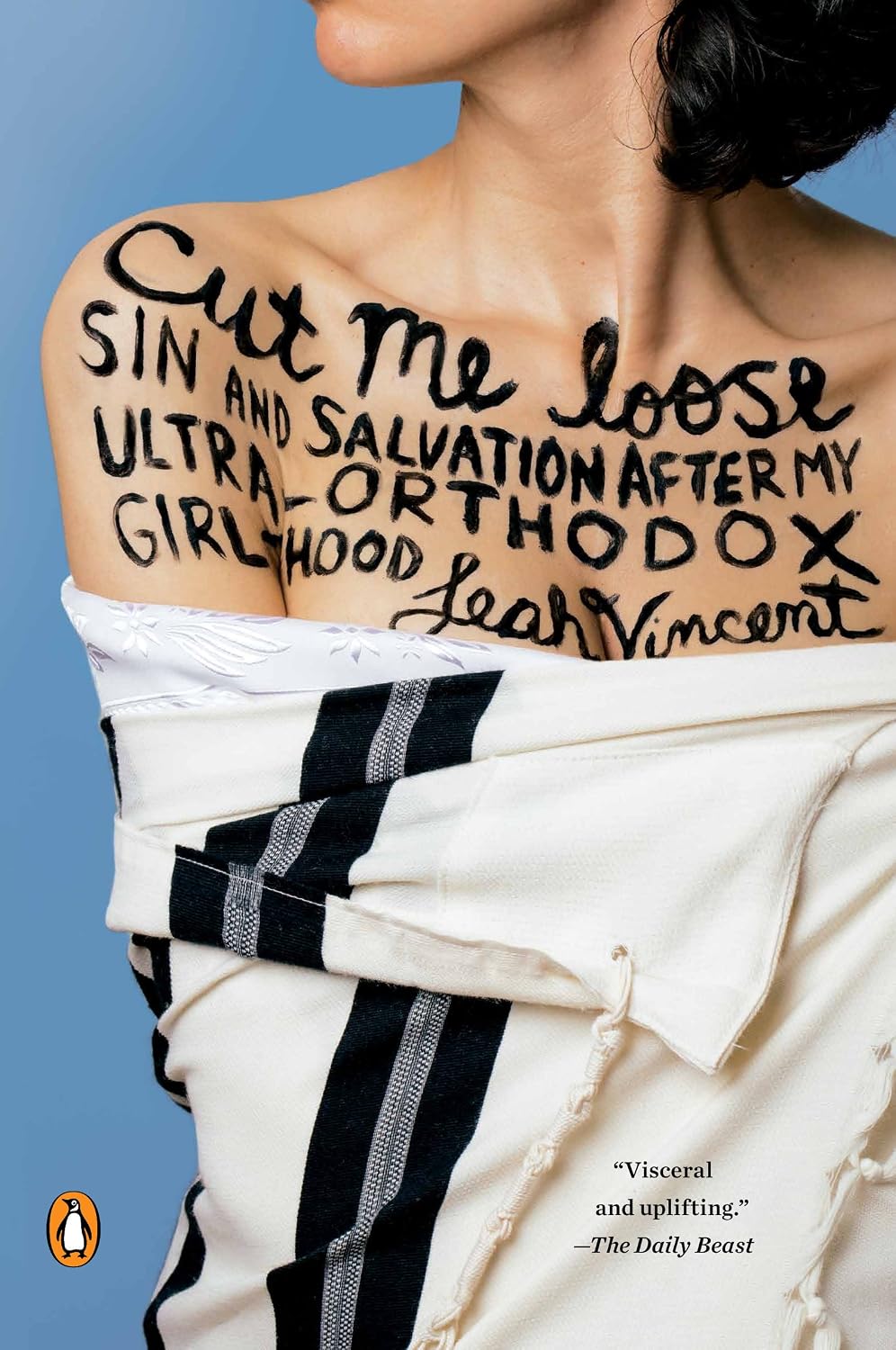
Book Review: "Cut Me Loose"


The memoir genre has grown by leaps and bounds in the last few years. However, it seems to me that the recent spate of books published by formerly ultra-Orthodox Jews offer a much needed antidote to the world of ultra-Orthodox Jewry that most people imagine. Indeed, that world in the United States is not the same as the one in Chagall’s paintings, Chaim Potok’s The Chosen, or Barry Levinson’s “Avalon.” The ultra-Orthodox world of Deborah Feldman’s “Unorthodox,” Shuleem Deen’s “All Who Go Do Not Return,” and Leah Vincent’s “Cut Me Loose” is a world that is much darker and more tragic than the one that we imagine.

Leah Vincent’s memoir is the most recent of the three. It is a well-written, thought provoking journey into the world of Yeshivish Jews. The story itself is one of a girl being cast out by her own community for violating sacred laws, find her identity, and then moving on to a better, brighter future. However, Leah Vincent’s tale is not a typical Cinderella story. It is far from that.

One of the ideas that Vincent iterates throughout the book is the notion that those who leave ultra-Orthodox communities are doomed to spend the rest of their lives as drug addicts, castaways, and good-for-nothings. Every woman who is not an obedient wife popping out children at regular intervals and leaves the community is viewed as nothing less than a whore. These brutal terms were so ingrained in Ms. Vincent’s psyche that she found herself turning into a woman who slept around with other men thereby fulfilling her community’s notions of what she would become.

The sexual nature of much of the memory is extremely explicit. I would not calling this pornography nor put it in the same category as other books that are out there, but the descriptions clearly show how violated Vincent was by the men in her life. These men, I would like to add, used her and threw her away as if she was nothing more than a toy that could be discarded at will. Even in her relationship with a professor, she was dropped when she got in the way of that man’s marriage.


Even more harrowing than Vincent’s sexual life is her treatment by her family. The author’s rejection by her most of the members of her family is brutal and final from the time she was seventeen years old. She was by her parents as if she had a disease. They also refused to cover her bills when she landed in a psychiatric hospital. Their treatment of her, however, makes sense to those who understand that a person who is unclean must not be touched at all and someone who has left the fold must be rejected. The world of the ultra-Orthodox is not grey. It is black and white. It is a lesson that Leah Vincent learned to her sorrow and one that also allowed her to grow into the woman she eventually became.